Most Repeated Topics in CSS English Essay Past Papers (2000–2024)
I went through every CSS English Essay paper from 2000 to 2024. That is 25 papers, roughly 200 individual topics, spread across a quarter century of FPSC exams. What I found is something most aspirants suspect but never bother to verify: FPSC keeps coming back to the same ten families of questions. The words change. The framing shifts with the times. But the underlying concerns stay remarkably fixed.
If you understand these patterns, you do not need to memorize 50 essay outlines. You need command over ten themes and the ability to adapt when FPSC wraps an old idea in new language. This post gives you those ten themes, shows you exactly where they appeared, and tells you what to actually do with this information.
Why most aspirants prepare for the essay paper the wrong way
The standard academy approach is to hand you a list of 30 to 40 "expected topics" and tell you to prepare outlines for each one. I have watched students do this for years. The problem is obvious once you look at how FPSC actually sets this paper.
In CSS 2023, the topics included statements like "The fool speaks, and the wise listens" and "Instruction in youth is like engraving in stone." No amount of topic prediction could have told you those exact phrasings. But if you had spent months building a deep understanding of education, governance, and philosophical reasoning, you could have written confidently on at least three or four of those ten topics.
The essay paper averaged 26.1 out of 100 in CSS 2025. That is not a typo. The average candidate scored roughly a quarter of the total marks on a paper that requires 40% to pass. This is the most failed compulsory paper in the exam, and it is not because the topics are impossible. It is because candidates prepare for specific predictions instead of building real command over recurring themes.
The 10 themes FPSC keeps returning to
I categorized every topic from the CSS English Essay past papers archive into thematic families. Some topics belong to more than one family, which is itself a pattern worth understanding. Here are the ten families ranked by how often they have appeared.
1. Governance, democracy and political systems
This is the single most repeated theme in 24 years of papers. FPSC has asked about governance, democracy, political culture, or institutional performance in almost every paper since 2000.
Look at the trail. In 2000, FPSC asked about "good governance and the role of the public servant" and "the purification of politics is an iridescent dream." In 2001, it was "devolution of power in Pakistan" and "public office is a public trust." By 2002, you get "politics is perhaps the only profession for which no preparation is thought necessary."
Skip ahead to 2009: "the future of democracy in Pakistan." Then 2012: "democracy is a culture rather than a process." In 2017, the paper asked about polarized politics. By 2019, FPSC connected democracy directly to literacy. In 2020, the same polarization theme returned. And in 2024, the paper gave candidates "Political Polarization; Governance and Society."
That is the same concern, dressed differently every few years. FPSC wants to know whether you can think critically about how political systems work, why they fail, and what accountability looks like. If you cannot write an informed essay about democratic governance in Pakistan after twelve months of preparation, something has gone seriously wrong with your study plan.
2. Globalization, international relations and world order
The second most frequent family. FPSC has been asking about globalization since at least 2004, when the paper included "globalization and electronic media." By 2022, the paper had three separate topics touching globalization: global trade policies of China, global politics and international relations, and an analysis of the concept of globalization of markets.
In 2024, FPSC gave candidates "CPEC and Indo Middle East Europe: new war fronts," "BRICS and Pakistan: Prospects of Recovery," and "Globalization and National Economics." Three out of ten topics in a single paper fell under this family.
The CSS Special 2023 paper asked about whether developing countries can benefit from international trade and about unipolar versus bipolar versus multipolar world order.
The pattern is clear. FPSC expects future civil servants to have a position on how global systems work and where Pakistan fits within them. You do not need to be an IR expert for this. You need a working knowledge of trade dynamics, CPEC, BRICS, and how global power shifts affect a country like Pakistan.
3. Gender, feminism and women's rights
This theme has appeared with increasing frequency over the last decade. In 2005, the paper asked about the "persecuted poor woman." In 2007, it was "the state of women rights in Pakistan." By 2017, FPSC began framing it more sharply: "feminism is not really a Third World issue."
Then it accelerated. In 2019: "new waves of feminism and our culture." In 2020: "women universities as agents of change." In 2021: "gender equality: a popular slogan." In 2022: "the controversial issues of feminism in contemporary women's rights movements." The CSS Special 2023 paper asked whether "Pakistani women have the same chances as men."
If you are preparing for CSS 2027, treat gender issues as a guaranteed presence in your essay paper. FPSC has not skipped this theme in any recent year. Your preparation should cover the legal framework for women's rights in Pakistan, the cultural arguments on both sides, and real statistics about female participation in education and the workforce.
4. Environment, climate change and water
Water appeared in the very first paper in this archive. CSS 2000 asked "we never know the worth of water till the well is dry." In 2003, FPSC returned with "the dilemma of the water and energy crisis in Pakistan." Global warming showed up in 2006, 2007, and 2008, three years in a row.
After a gap, the environment returned strongly. CSS 2021 asked "do not waste water even if you were at a running stream." The 2024 paper included "phase out of fossil fuel and Arab economies." And from the 2025 paper, there was a topic about reforestation as a global urgency.
Water, climate change, and energy have formed a persistent cluster across 24 years. FPSC clearly considers environmental literacy a requirement for anyone entering the civil service. If you are not comfortable writing about Pakistan's water table, climate policy, or the energy transition, fill that gap now.
5. Pakistan's economy, poverty and development
This theme overlaps with others but has its own distinct presence. CSS 2000 asked about "strategies for the alleviation of poverty" and about the link between economic prosperity and literacy. In 2010, FPSC asked whether Pakistan is "rich in natural resources but very poor in their management."
In 2020, the paper asked about IMF bailouts: "roads to stability or recipes for disaster." Tourism appeared the same year. By 2024, the paper directly asked about "pathways to Pakistan's prosperity."
You should be able to write about Pakistan's economy without relying on vague generalities. Know the current GDP figures, debt to GDP ratio, major exports, and the core structural problems. When FPSC asks about economic prosperity, they want analysis, not hope.
6. Science, technology and artificial intelligence
This family was quiet in the early 2000s. CSS 2000 included "the suffering soul in the scientific age" and a topic linking advancement in science to national prosperity. But science topics were rare until recently.
The shift happened around 2023. The regular CSS 2023 paper asked "people have become overly dependent on technology" and featured online learning versus traditional classrooms. The CSS Special 2023 paper went further: "artificial intelligence has overstepped its bounds." Then in 2024, FPSC asked about "artificial intelligence: the death of creativity."
AI is now a confirmed recurring topic. FPSC asked about it in back to back papers. If you are preparing for the next exam, you need to be able to write about AI's impact on employment, creativity, governance, warfare, and education. This is no longer a niche topic. It is mainstream CSS territory.
7. Terrorism, security and conflict
This theme peaked in the 2007 to 2018 period, when Pakistan was dealing with the worst of internal militancy. CSS 2007, 2009, and 2015 all featured terrorism related topics. In 2018, the paper connected terrorism with human rights: "in the fight against terrorism and corruption, it is imperative not to compromise human rights and civil liberties." The 2022 paper asked how mass media shapes the perception of terrorism.
Terrorism as a standalone theme has become less frequent since 2020, but it still appears wrapped inside broader topics about governance, media, or human rights. Do not drop it from your preparation entirely. Be ready to connect it to media narratives, civil liberties, or the cost of conflict on development.
8. Education and literacy
FPSC has asked about education repeatedly, though often embedded inside other themes. In 2000, literacy was tied to economic prosperity. In 2009, the paper asked about English as a medium of education. In 2019, democracy was linked to literacy. The CSS 2023 paper asked about online versus traditional learning and about how children should be taught to think rather than memorize.
Education rarely appears as a pure standalone topic. FPSC tends to link it with democracy, economy, or technology. Prepare for education not as an isolated subject but as something you can connect to three or four other themes.
9. Philosophy, morality and abstract reasoning
This is the category that catches candidates off guard. In 2023, FPSC went heavily philosophical. "The fool speaks, and the wise listens." "Instruction in youth is like engraving in stone." "A friend walks in when everyone else walks out." These are not policy questions. They test whether you can build an original argument around an abstract idea.
The CSS Special 2023 paper continued this: "no legacy is so rich as honesty" and "it matters not what someone is born, but what they grow to be."
Earlier papers had these too. CSS 2002 asked "every art is an imitation of nature." CSS 2019 gave candidates "truth is lived, not taught."
Many aspirants avoid these topics on exam day because they feel unprepared for them. That is exactly why they are valuable. If you practice building arguments around abstract statements, you give yourself options that most of the room does not have. When 8,000 candidates pick the governance topic and you write a strong philosophical essay, you stand out.
10. Media, propaganda and information
This is the newest recurring family. In 2004, FPSC asked about globalization and electronic media. By 2022, it was "digital democracy: social media and political participation." The CSS Special 2023 asked whether "social media has destroyed real life communication." In 2024, propaganda appeared directly: "the power of propaganda and the Muslim World."
Social media and information warfare are now permanent fixtures of how FPSC thinks about the essay paper. You should be able to discuss misinformation, media regulation, the role of social platforms in political movements, and how propaganda shapes public opinion.
What this analysis actually tells you about preparation
If you look at the ten families above, you will notice that six or seven of them show up in almost every paper. A typical CSS English Essay paper offers ten topics. Governance will be there. Globalization will be there. Gender or environment will be there. Some form of technology, media, or abstract philosophy will round out the list.
This means you do not need to prepare for 40 topics. You need genuine depth in these ten families and the ability to write about any of them under exam pressure.
Here is how I would approach it.
Pick six families where you feel strongest. Spend three to four weeks building deep reading in each one. For every family, know three or four Pakistani examples, two or three international examples, and at least a few relevant statistics from the last two years. Then practice writing full length essays under timed conditions using old past paper topics as prompts.
The mistake most candidates make is preparing wide and shallow. They skim ten topics, memorize a few quotations, and hope for the best. That is how you end up with a 26 out of 100.
The shift FPSC has made since 2020
One more pattern worth noting. Before 2020, FPSC leaned toward descriptive and policy oriented topics. "The future of democracy in Pakistan" is a descriptive prompt. You describe the challenges, offer analysis, and suggest a way forward.
Since 2020, FPSC has increasingly favoured argumentative and philosophical framing. "Pragmatism vs passion in politics" is not asking you to describe anything. It is asking you to take a position. "Artificial intelligence: the death of creativity" demands that you argue for or against a provocative claim.
This shift matters for how you practice. If you only prepare descriptive outlines, you will struggle with the newer style of topics. Practice taking a clear position, defending it with evidence, and addressing the counterargument. That is what the examiner is now looking for.
What should you do right now
First, go through the complete English Essay past papers archive from 2000 to 2024 and read every topic list yourself. Do not just take my word for the patterns. See them with your own eyes. Note which topics you could have attempted and which ones would have left you blank. Your blanks are your preparation gaps.
Second, check how the CSS 2025 compulsory results break down for the Essay paper. Understand where the average candidate fails so you know the bar you need to clear.
Third, build your reading around themes, not predictions. A well prepared candidate who understands governance, globalization, gender, environment, AI, and one or two abstract reasoning patterns can attempt at least four out of ten topics in any given year. That is a position of strength. You pick the topic you know best, not the one you happen to have memorized an outline for.
Your essay paper is worth 100 marks. Your optional subjects are worth 600. Both matter, and one bad decision on subject selection can undo months of essay practice. If you have not yet settled your optional combination based on actual data rather than academy advice, start with the CSSNorthstar assessment and get that decision right before you go any further.
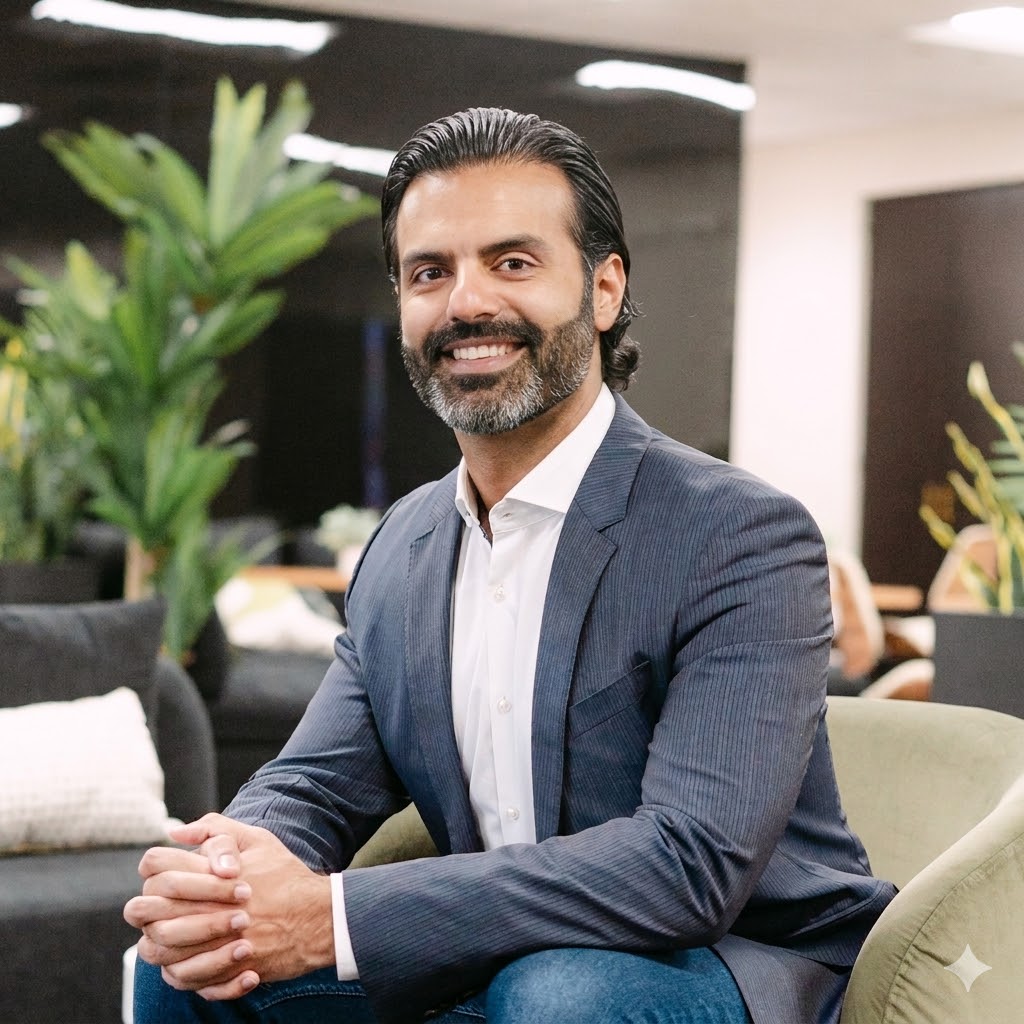
Sheharyar Ahmad
Founder, CSSNorthstar
Sheharyar Ahmad graduated from LUMS with BSc. (Hons.) in 2010 and topped the CSS Exam 2012 on his first attempt. He is an officer of the Pakistan Administrative Service, having served in Gilgit-Baltistan, Punjab, and Federal governments. He was awarded the Fulbright Scholarship to pursue a Master in Public Policy and Data Analytics from USA in 2022.