How to Start CSS Preparation From Zero: The Complete First-Year Roadmap
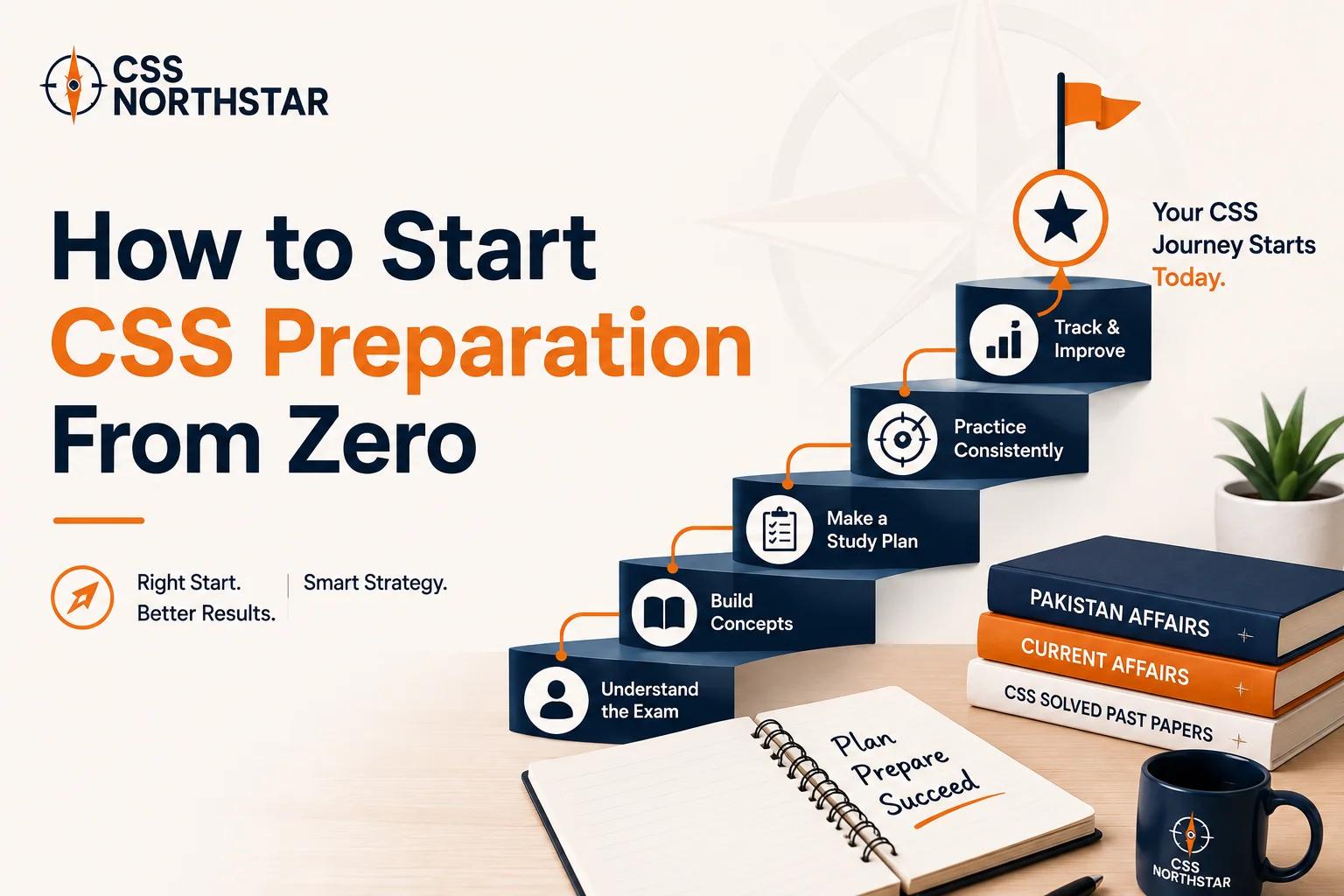
Most articles on how to start CSS preparation give you a list. Read Dawn. Make a schedule. Pick your subjects. Read good books. The lists are not wrong, but they are missing the part that matters most: the sequence.
The difference between aspirants who clear CSS and aspirants who prepare seriously but fail is rarely how many hours they put in. It is what they did with those hours in the first three months. In CSS 2025, only 355 candidates passed the written exam out of 12,792 who appeared. That is a pass rate of 2.77 percent. The vast majority of candidates who failed were not lazy. They worked hard. They simply started in the wrong place and built preparation on a weak foundation.
I cleared CSS in my first attempt in 2012. Looking back, the single biggest reason I succeeded was that I spent the first three months doing nothing that looked like CSS preparation to an outside observer. No subject study. No notes. No books opened beyond the FPSC syllabus itself.
This guide is what I would tell my younger self if I were starting today. It is the sequence that works, in the order it should be done, with honest expectations about how long each phase takes.
Before Day One: Decisions to Make First
There is preparation work that must happen before you study a single subject. Skipping this is the most common reason aspirants spend months working in the wrong direction.
Confirm Your Eligibility
Before investing months of study, confirm you are actually eligible for CSS under the current rules. For CSS 2026 and 2027, the operative rules remain: age 21 to 30 on 31 December of the year preceding the exam, Bachelor's degree with at least second division from an HEC-recognised institution, Pakistani citizen or AJK or Gilgit-Baltistan subject, a valid domicile certificate, and a maximum of three written attempts remaining.
The National Assembly approved raising the age limit to 35 and attempts to 5 in May 2025, but FPSC has not yet officially implemented this change. Plan under the existing rules.
Download and Read the FPSC Syllabus
Visit fpsc.gov.pk and download the official CSS syllabus document. Read it completely. Every subject, every topic heading. This document defines the boundaries of your exam. Everything outside it is noise.
Most aspirants skim the syllabus. Read it carefully. Understanding what FPSC actually examines is foundational. Many candidates fail because they prepare topics that are not on the syllabus, or miss topics that are.
Understand the Three-Stage Process
The CSS examination runs in three stages:
- MPT (MCQ-Based Preliminary Test): A 200-question qualifying screening test. Only MPT qualifiers proceed to the written examination.
- Written Examination: 12 papers (6 compulsory and 6 optional), totalling 1,200 marks, held over approximately three weeks.
- Psychological Assessment and Viva Voce: 300 marks combined. Minimum 100 marks required to pass.
Your preparation must serve all three stages in the correct sequence. Many aspirants prepare only for the written exam and arrive unprepared at the post-written stages.
Make the Optional Subject Decision Properly
This is the single most consequential preparation decision you will make. Choosing the wrong six optional subjects can render twelve months of effort ineffective, because different subjects have dramatically different pass rates, score consistency, and allocation prospects depending on your domicile and academic background.
The CSSNorthstar assessment uses six years of FPSC result data from 2020 to 2025 to match your specific profile to the subject combination most likely to perform. Make this decision in Month 2 or 3 of your preparation, not Month 9 when you have already invested heavily in possibly wrong subjects.
Phase 1: Foundation (Months 1 to 3)
This is the phase almost every aspirant skips or compresses, and it is the phase that determines whether the entire preparation works.
The Counterintuitive Rule
In the first three months, you do not study CSS subjects.
Read that again. No Pakistan Affairs. No Current Affairs notes. No International Relations textbook. No Islamic Studies revision.
Why? Because the CSS exam is fundamentally a writing exam in English. Six compulsory papers and six optional papers are evaluated based on the quality of your analytical writing in English. If your reading comprehension is weak, your vocabulary is limited, or your written English is shaky, no amount of subject knowledge will produce scoring answers. You will know the material and still write poorly.
Most aspirants begin with subjects because subjects feel like CSS preparation. The result is that they accumulate notes faster than they accumulate the skill to actually use those notes in the exam.
What to Do Instead
For the first three months, two things only.
Daily English reading. One Dawn editorial every morning. Read it carefully. Look up every word you do not know. Underline sentences that strike you as well constructed. After reading, write a 150-word summary in your own words. Not a paraphrase. A summary that captures the argument.
This single habit, sustained for three months, will transform your English reading comprehension and your writing speed. Add Project Syndicate articles two or three times a week for international analytical writing. Add The Economist if you can access it.
Daily current affairs habit. The same Dawn newspaper covers most of what you need. Maintain a single notebook with one page per major topic: CPEC, Kashmir, Pakistan-IMF relationship, Afghan situation, climate policy, governance reforms, US-China dynamics, and so on. Add to each page as news develops. Do not create separate daily notes. The goal is a growing knowledge base on themes, not a chronological record of news.
What This Phase Looks Like
A workable daily schedule for Phase 1:
Morning (60 to 90 minutes): Read Dawn editorial. Look up unknown words. Write 150-word summary.
Afternoon (30 to 45 minutes): Read one Project Syndicate or analytical piece. Note useful arguments and phrases.
Evening (30 minutes): Update your current affairs notebook with the day's significant developments.
Three to four hours total. This may feel insufficient. It is not. The work in Phase 1 is building the foundation that everything else depends on.
What Not to Do
Do not buy CSS books yet. Do not start taking subject notes. Do not enrol in subject classes. Do not panic that other aspirants are studying more subjects than you. They are building a house with no foundation.
Phase 2: The Build (Months 4 to 9)
With three months of daily English and current affairs work behind you, you are ready to add subject study. Two important shifts now.
Lock in Your Optional Subjects
If you have not already, complete the CSSNorthstar assessment and finalise your six optional subjects. This decision affects every subsequent study hour. It cannot be left to Month 7 or 8.
Add Structured Subject Rotation
Maintain your daily English and current affairs habits from Phase 1. They do not stop. They become the spine of your preparation. Around them, add subject study in rotation.
A workable rotation for Phase 2:
Monday and Tuesday: Pakistan Affairs. Why first? Because Pakistan Affairs overlaps with Current Affairs and feeds directly into your Essay paper. Notes built here pay dividends across multiple papers.
Wednesday and Thursday: First optional subject.
Friday and Saturday: Second optional subject.
Sunday: Compulsory subject review (alternating between General Science and Ability, Islamiyat, and English Precis).
This is one cycle. Repeat across weeks, rotating through your six optional subjects so each gets attention every three to four weeks. No subject should go cold.
How Long Per Day
Phase 2 daily commitment: 4 to 6 hours of focused study, in addition to the Phase 1 habits which now take 90 to 120 minutes daily. Total 5 to 8 hours.
This is sustainable for 6 to 9 months if you build it gradually. Aspirants who attempt 10 to 12 hour days from the start burn out within 8 to 10 weeks and lose more time than they gained.
Source Material Strategy
For each subject, use this sequence:
- The FPSC syllabus first. Map every topic listed.
- Past papers. Look at the last 10 years of papers for the subject. This shows you exactly how FPSC asks questions on each topic.
- One or two well-chosen books. Not five or six. The quality of engagement with two books outperforms shallow coverage of seven.
- CSSForum.com.pk notes. Free, comprehensive, and useful as supplementary material.
- Your own notes. Build them in your own words from your reading. Notes copied from other sources do not embed knowledge.
Phase 3: The Writing Practice (Starts Month 6, Intensifies Month 9 Onward)
This is the phase that produces actual exam-ready candidates.
The Single Most Neglected Activity
Most CSS aspirants read extensively but write almost nothing until the final weeks before the exam. This is why prepared candidates fail. The exam is a writing exam. Reading is preparation for writing, not a substitute for it.
From Month 6 of your preparation, write at least one full exam-quality answer every day. Time yourself. Three to four paragraphs. Clear thesis in the opening. Evidence and analysis in the body. Coherent conclusion.
The next morning, read your answer with fresh eyes. Ask whether it actually answers the question. Ask whether the argument is logical. Ask whether the English is clean.
Find One Person to Read Your Work
The single highest-yield resource a self-preparing CSS aspirant can find is one experienced reader who will give honest feedback on written answers. A teacher, a friend with strong English, a senior who cleared CSS, a fellow aspirant. One person, weekly, reading one of your answers and telling you honestly whether it works.
If you cannot find this person, use AI tools to evaluate structure and coherence. Generic English AI tools can identify weak arguments, unclear thesis statements, and organisational problems. They cannot tell you whether the answer would impress a CSS examiner specifically, but they can tell you whether it would impress any reader.
Phase 4: The Practice Cycle (Months 10 to 12)
The final preparation phase shifts from learning to performing.
Set aside one full day per week to simulate exam conditions. Take one paper, set a three-hour timer, write all your answers, and stop when the timer ends. Do not consult notes mid-exam. The purpose is to find where your time management breaks, where your knowledge gaps create blank pages, and where your handwriting becomes illegible under pressure.
Review your performance the next day. Close the gaps. Repeat the next week with a different paper.
This is also the phase to consolidate. Stop reading new material in Month 11 and Month 12 unless current affairs requires it. Use this time to revise your existing notes, refine your essay writing, and build the mental endurance for back-to-back three-hour papers across three exam weeks.
The Mental Dimension Most Posts Skip
Twelve months of consistent CSS preparation is a serious psychological challenge. Aspirants who burn out, lose motivation, or descend into anxiety in Month 7 or 8 do not fail because of weak preparation. They fail because they did not plan for the mental demand.
Three things help.
A non-CSS hobby that recharges you. Reading non-CSS material, exercise, time with non-CSS friends. The mind needs spaces that are not the exam.
Realistic expectations. Some days you will study 8 hours. Some days you will study 3. The goal is consistency across months, not perfection across days.
Avoid comparison with other aspirants. Particularly on social media. Other aspirants posting their study schedules and book stacks does not reflect their actual progress. It reflects their performance for social media. Stay focused on your own preparation.
Common Mistakes Beginners Make
After years of observing CSS aspirants, the consistent patterns of failure are these:
Skipping Phase 1. Treating English and current affairs as something to do in spare time while focusing on subjects from Day 1. The foundation never gets built.
Choosing optional subjects without data. Picking subjects because a friend recommended them, because the academy teaches them, or because they sound interesting. The wrong subjects undermine an otherwise strong preparation.
Accumulating notes without writing. The notebook grows but the writing skill does not. Reading and note-making feel productive but are not the actual exam.
Excessive subject coverage at shallow depth. Trying to read every recommended book for every subject. Better to know two books well than six books loosely.
Last-minute mock exams. Treating practice exams as a final-month activity rather than an ongoing skill development.
The CSSNorthstar MPT mock test is built specifically for this — 200 MCQs under timed conditions so you know exactly where your preparation stands before exam day, not after it.
Underestimating English. Particularly common among aspirants with strong academic backgrounds in technical fields. Subject knowledge does not produce CSS scores. Writing produces CSS scores.
Realistic Expectations
A realistic preparation timeline for a serious first-time CSS aspirant is 14 to 18 months. Three months of foundation, six to nine months of building, three to six months of writing practice and revision.
Aspirants who attempt to compress this into 6 months can clear if they are exceptionally gifted readers and writers in English from the start, but this is the exception not the rule. Aspirants who plan 24 to 36 months can succeed if they sustain consistency, but most lose momentum somewhere in the middle without a tighter timeline.
The pass rate of 2.77 percent in CSS 2025 reflects the difficulty of the exam, not its impossibility. The candidates who cleared it did the right things in the right sequence and stayed consistent. That is the formula. There is no other.
What to Do Today
If you are at zero today and serious about preparing for CSS, take these actions in order:
- Confirm your eligibility against the current FPSC rules
- Download and read the official CSS syllabus from fpsc.gov.pk
- Begin Phase 1 tonight by reading today's Dawn editorial and writing a 150-word summary
- Schedule the CSSNorthstar assessment within the next 4 to 6 weeks so your optional subjects are decided based on data before Phase 2 begins
- Buy a single notebook for current affairs and start the one-page-per-topic structure tonight
That is your first week's work. Everything else builds from here.
The exam is hard. It is not impossible. Aspirants from every background, every city, every domicile clear it every year. What separates them is not talent. It is the sequence of decisions they made starting today.
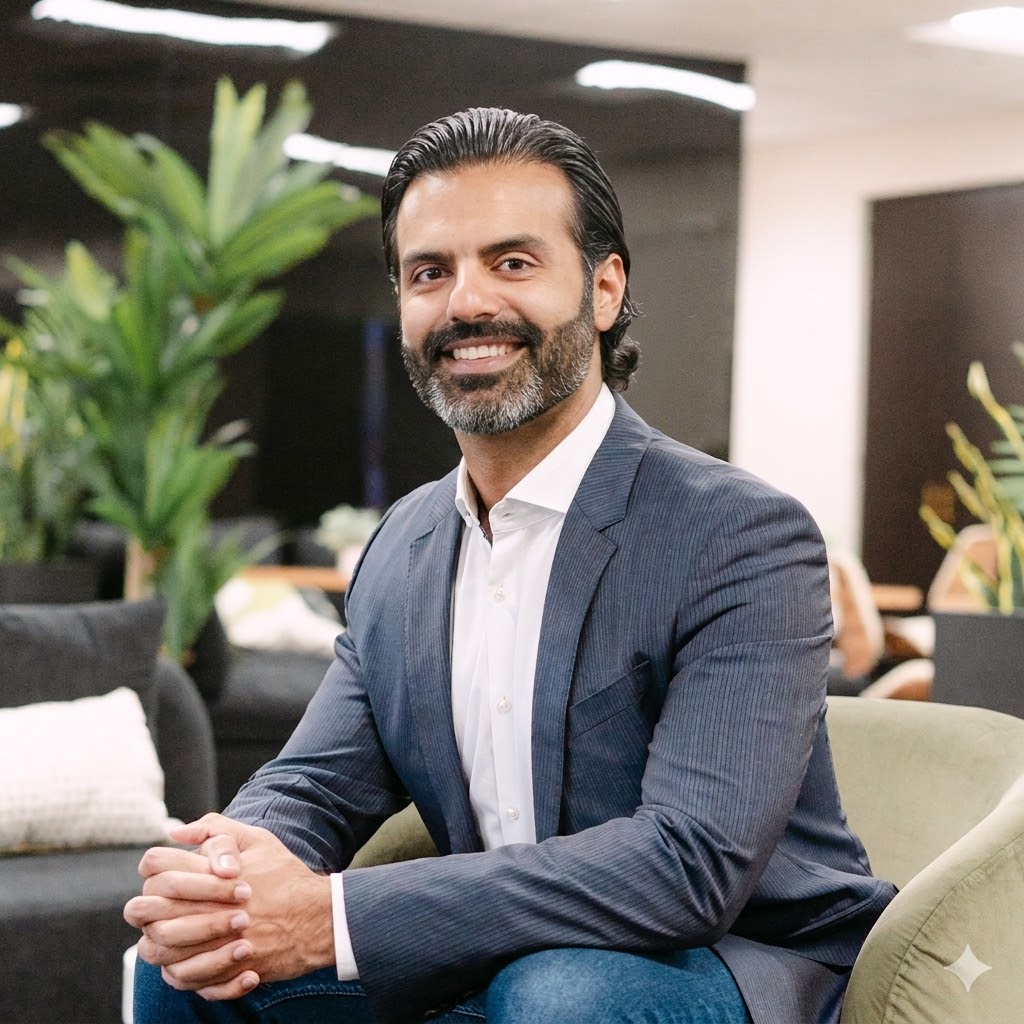
Sheharyar Ahmad
Founder, CSSNorthstar
Sheharyar Ahmad graduated from LUMS with BSc. (Hons.) in 2010 and topped the CSS Exam 2012 on his first attempt. He is an officer of the Pakistan Administrative Service, having served in Gilgit-Baltistan, Punjab, and Federal governments. He was awarded the Fulbright Scholarship to pursue a Master in Public Policy and Data Analytics from USA in 2022.