How AI Tools Are Replacing Expensive CSS Academies
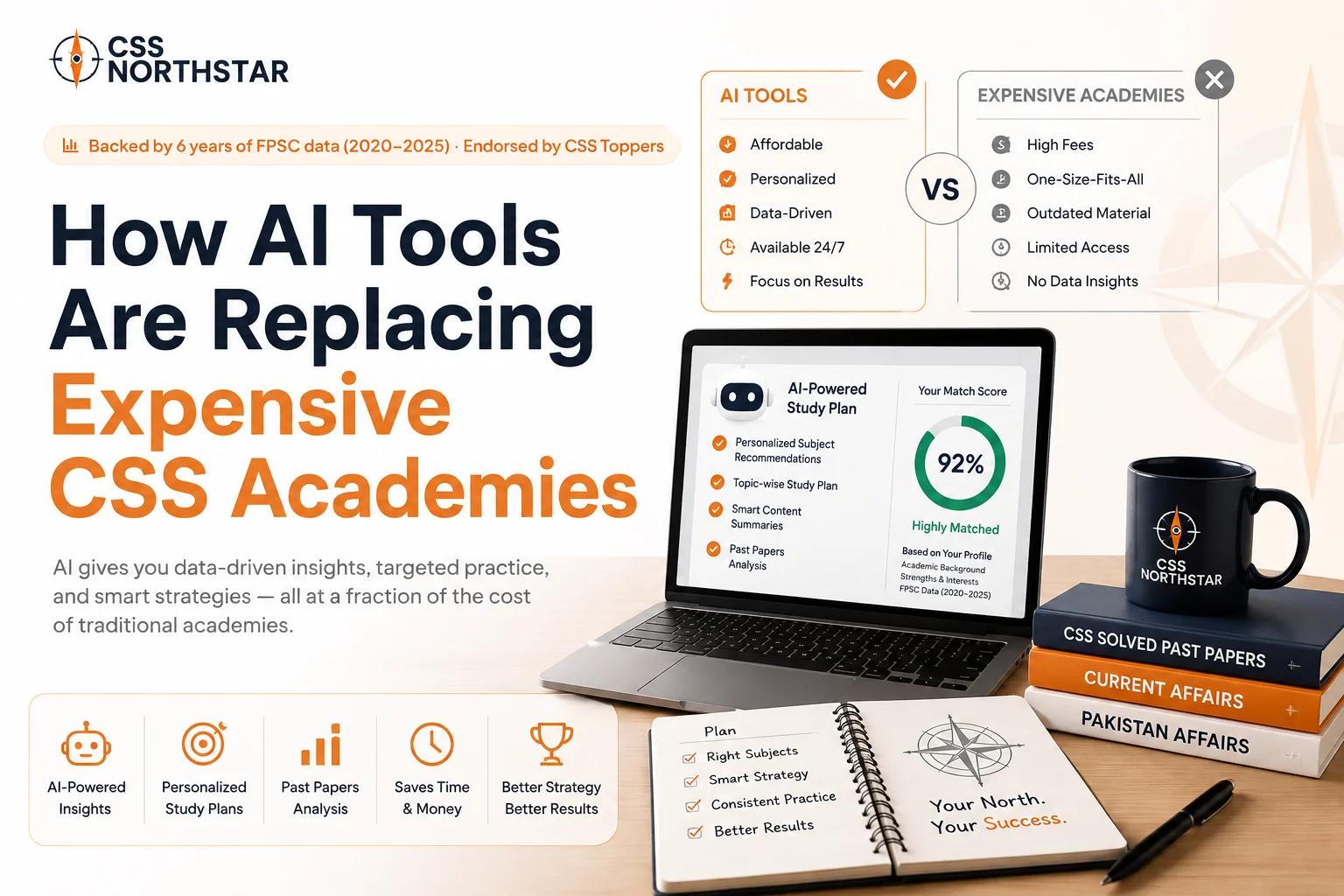
In January 2026, Pakistan's Federal Minister for IT inaugurated an AI 101 module at the Civil Services Academy in Islamabad for probationary CSS officers. The government is integrating AI directly into how civil servants are trained. The exam that prepares candidates for those positions is changing around the same force.
AI is already reshaping CSS preparation. The question is not whether it matters. It is what it actually does well, what it does poorly, and how a serious aspirant should be using it.
I built CSSNorthstar on this premise. Not AI for its own sake, but AI applied to a specific problem that academies have never solved properly: using six years of real FPSC result data to tell an individual aspirant, with their specific background and domicile, which subjects are actually likely to perform for them. That is a data problem. AI solves data problems. Human intuition and generic academy advice do not.
Here is the honest breakdown.
What AI Genuinely Does Better Than a CSS Academy
Subject selection based on actual data, not what the academy teaches.
This is the most important one and the one closest to what CSSNorthstar is built to solve. When a traditional CSS academy advises you on optional subjects, they are working from the subjects their faculty covers, the notes they have prepared, and the anecdotal experience of previous batches. They are not running statistical analysis on six years of FPSC score distributions, pass rates by province, and allocation conversion rates by subject combination.
AI trained on that data can do something no academy faculty member can do in a ten-minute consultation: process hundreds of data points about your background, your domicile quota, your academic preparation, and your risk tolerance, and produce a subject recommendation grounded in what actually happened in the exam, not what someone remembers happening.
The CSSNorthstar assessment does exactly this. The output is not a generic recommendation. It is a personalised strategy report with fit scores, predicted marks, risk ratings by subject, and allocation probability calculations specific to your province.
Essay structure and argument development.
AI language tools are genuinely useful for CSS essay preparation. An aspirant can write a practice essay, share it with an AI tool, and receive structured feedback on argument coherence, thesis clarity, paragraph organisation, and English quality. This is feedback that previously required access to an experienced teacher or a senior who cleared the exam.
Be specific about what this is and is not. AI feedback on an essay tells you whether the argument is logically structured and clearly expressed. It cannot tell you whether the argument would impress a CSS examiner specifically, because that requires knowledge of what FPSC examiners have historically valued. For the structural dimension, AI tools are genuinely useful. For exam-specific judgement, you still need human experience.
Current Affairs organisation and synthesis.
An aspirant can now use AI tools to synthesise a month of current affairs into structured topic notes in minutes. To generate practice questions on any topic that appeared in the news. To explain a complex economic or geopolitical development in plain language before going deeper into it. This is a genuine time saving that allows more time for actual writing practice.
24/7 availability and zero travel cost.
A student in Dera Ismail Khan preparing for CSS at 11pm on a Tuesday has the same access to AI preparation tools as a student enrolled in an Islamabad academy. This is not a small thing. A significant portion of Pakistan's CSS aspirants live outside the cities where quality academy instruction is concentrated. AI tools remove the geography tax entirely.
What Exists in the AI CSS Space Right Now
There is now a growing number of AI-powered CSS preparation platforms. CSS GPT at cssgpt.pk launched as one of the first, offering essay evaluation, past paper analysis, and subject guidance.
Here is where CSSNorthstar is fundamentally different. Most AI CSS tools are general language models applied to CSS content. They can answer questions about the syllabus, evaluate essay structure, and generate practice questions. What they cannot do is tell you, based on your specific domicile, academic background, and the actual statistical performance of subjects in FPSC exams from 2020 to 2025, which combination of optional subjects gives you the best probability of allocation.
That requires data. Real FPSC data, granular enough to show score distributions by subject, pass rates by province, and allocation conversion rates by service group. CSSNorthstar is built on that data. The AI layer is the engine that matches your individual profile to what that data shows. It is not a chatbot with a CSS personality. It is a decision-support tool for the single most consequential choice in your preparation.
Start the assessment here to see exactly what it produces for your profile.
What AI Tools Still Cannot Replace
Be honest about this. There are things AI cannot do for CSS preparation.
Sustained writing discipline. AI can give you feedback on an essay you wrote. It cannot make you sit down and write one every day. The preparation habit, the daily consistency that separates successful candidates from candidates who were ready but fell apart, requires human will. No tool provides that.
Real exam pressure simulation. Writing a practice essay in a comfortable room with an AI tool ready to give feedback is not the same as sitting in an exam hall for three hours with twelve papers ahead of you. Mock exams in real exam conditions, sitting alongside other candidates, remain the most effective way to prepare for the psychological dimension of the exam. AI cannot replicate that.
Domain-specific examiner judgement. A CSS examiner reading an International Relations paper is not evaluating general essay quality. They are evaluating whether you understand the specific analytical frameworks, the relevant treaties and institutions, and the contemporary issues the syllabus covers. AI feedback on essay quality is genuinely useful. Knowing what a CSS examiner in that subject specifically rewards still requires contact with people who have experienced the marking from the inside.
The viva voce. The 300-mark interview tests personality, presence, confidence, and responsiveness under pressure. No AI tool prepares you for what it actually feels like to sit across from a CSS board and defend your thinking in real time.
How to Use AI Tools Intelligently in Your CSS Preparation
Use AI for the decisions that are data problems. Subject selection is a data problem. CSSNorthstar solves it. See the full assessment here.
Use AI for feedback on your writing. Write the essay or answer yourself, then use an AI tool to evaluate structure and coherence. Do not use AI to generate the writing. The exam measures your writing, not the tool's.
Use AI to organise and synthesise Current Affairs. Generate topic summaries, practice questions, and issue frameworks. But verify against primary sources: Dawn, official government statements, FPSC examiner reports.
Use AI to replace the academy for what the academy was never great at anyway: generic instruction delivered to a class of 50 aspirants who all have different backgrounds, different domiciles, and different subject combinations. That model was always a poor fit for the personalisation the CSS exam actually requires.
The academy model charges every aspirant the same fee and gives every aspirant the same instruction. The data shows that does not produce consistent results. Personalised preparation, grounded in what actually happened in six years of FPSC exams, is what CSSNorthstar is built to provide.
Start your personalised CSS assessment here. The most important decision in your preparation should not be a guess.
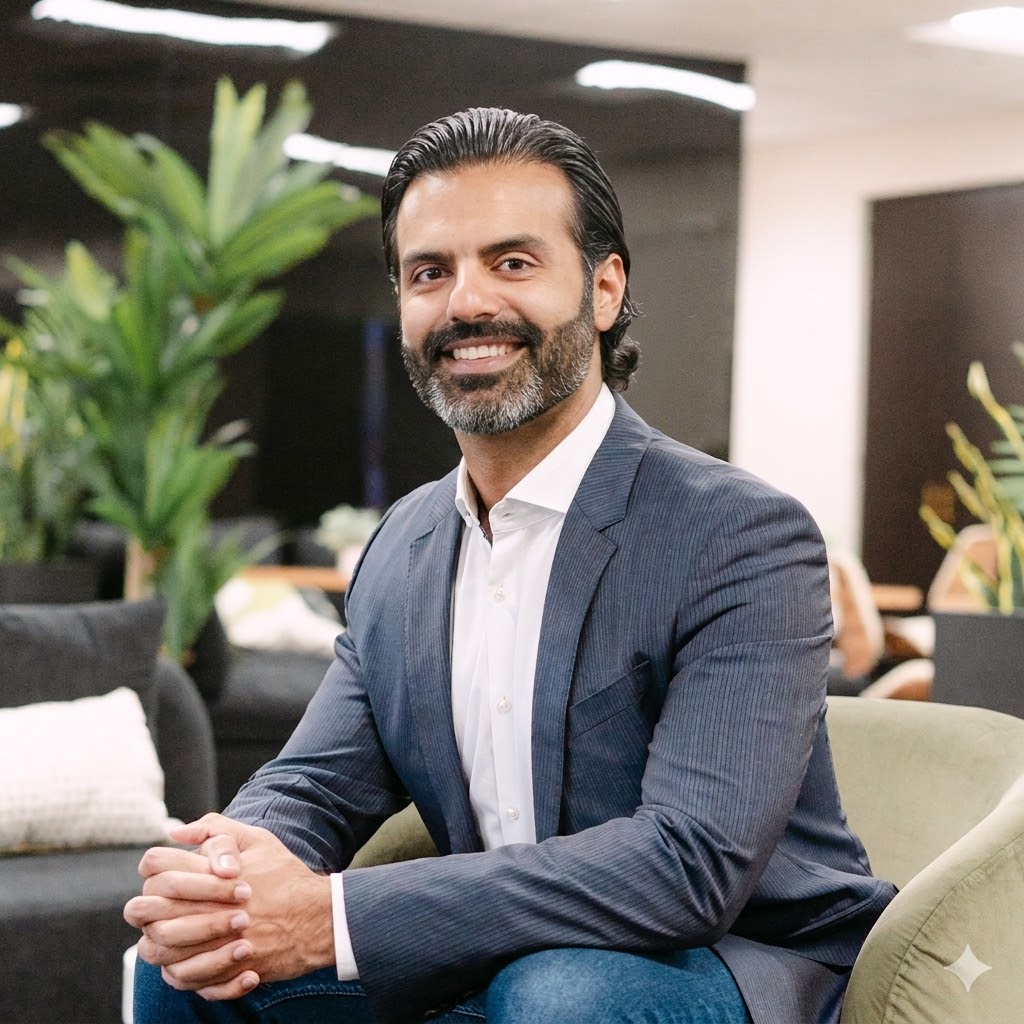
Sheharyar Ahmad
Founder, CSSNorthstar
Sheharyar Ahmad graduated from LUMS with BSc. (Hons.) in 2010 and topped the CSS Exam 2012 on his first attempt. He is an officer of the Pakistan Administrative Service, having served in Gilgit-Baltistan, Punjab, and Federal governments. He was awarded the Fulbright Scholarship to pursue a Master in Public Policy and Data Analytics from USA in 2022.