How to Choose CSS Optional Subjects Without Joining an Academy
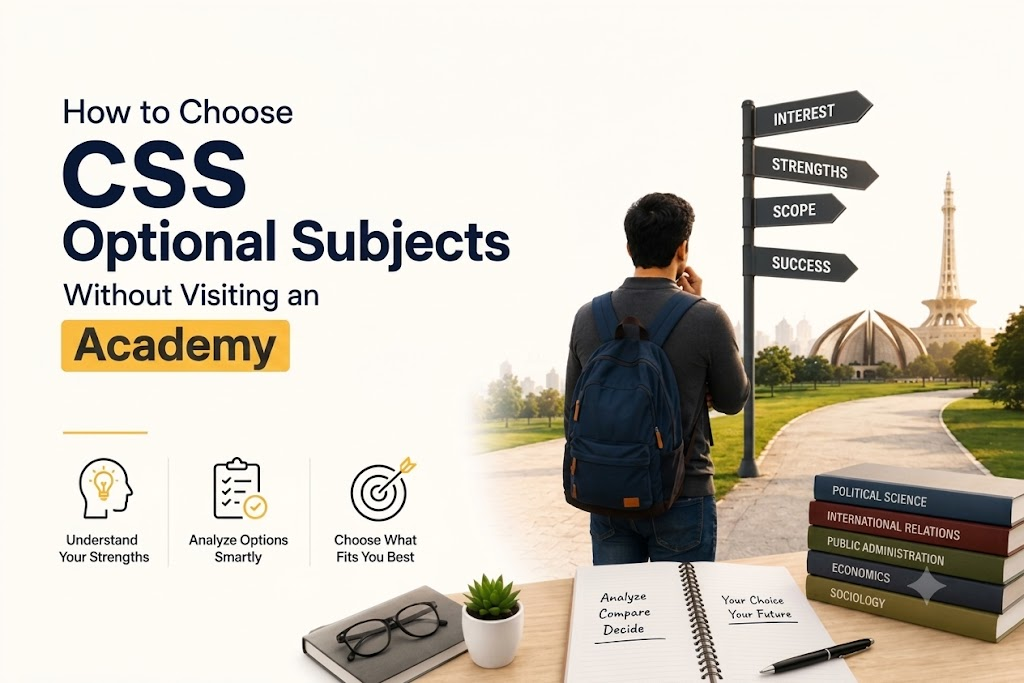
Every year, thousands of aspiring civil servants across Pakistan begin their CSS journey with the same burning question: Which optional subjects should I choose? For many, the instinct is to rush to a coaching center in Lahore, Islamabad or Karachi, sit in an orientation session, and let someone else make this critical decision. The truth is, this decision doesn't require a consultant or a coaching fee - it requires a clear method. With the right approach, the right resources, and a clear understanding of your own strengths, you can make a smarter, more personalized choice from your own room.
Why Optional Subject Selection Matters
Optional subjects contribute a significant portion of your CSS examination marks. Your optional subjects can make or break your CSS score. The CSS compulsory papers are standardized for everyone, but optional subjects are where candidates truly differentiate themselves. A wrong subject choice leads to:
- Low scores despite heavy effort;
- Loss of motivation mid-preparation;
- Difficulty finding relevant study material;
A well-planned combination can:
- Improve your scoring potential;
- Match your educational background;
- Reduce preparation time;
- Increase your chances of qualifying;
Getting this decision right - without pressure from a coaching center pushing their own curriculum - gives you a real edge.
Start with the FPSC Rules, Not Rumors
Your first step should be reviewing the official CSS syllabus issued by the Federal Public Service Commission (FPSC). First confirm:
- Total optional marks you need to select (currently 600 marks worth of optional alongside compulsory subjects);
- Maximum marks allowed from one group;
- Subjects that cannot be combined;
- Minimum qualifying marks per paper;
Knowing this, your goal should be to pick subjects that you can study effectively on your own without relying heavily on coaching.
Check Scoring Trends
Instead of guessing, look at FPSC's official result statistics (published yearly), which show the average and highest marks scored in each optional subject over the last 3–5 years.
- High-scoring: Average >70 marks (Accountancy, Business Administration, Regional Languages)
- Average-scoring: 50-60 marks (Political Science, Sociology)
- Low-scoring: <50 marks (some science subjects like Physics, Chemistry)
Download past papers and analyze question patterns for 2-3 years to identify targeting trends (some subjects are "targeted" every 4-10 years).
Match Subjects to Your Academic Background
A subject becomes easy not because it's "scoring" in general, but because you already have a foundation in it. Choosing optional subjects without coaching requires honest self-assessment. Reflect on your academic strengths, previous studies, and areas you enjoy reading about. Ask yourself:
- Did I study this subject in school, Bachelor's, or Master's?
- Do I already enjoy reading about this topic in newspapers, books, or for general knowledge?
- Do I prefer theoretical or analytical subjects?
- Can I find enough resources to study this subject independently?
- Am I motivated to study this subject for several months?
For example, if you have a background in political science or enjoy current affairs, International Relations, or Political Science might be good options. If you prefer subjects with factual content and maps, Geography could be suitable.
This self-assessment is something only you can do accurately — not a coaching center.
General guideline
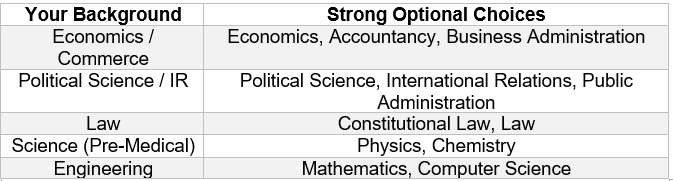
Your Background
Strong Optional Choices
Economics / Commerce
Economics, Accountancy, Business Administration
Political Science / IR
Political Science, International Relations, Public Administration
Law
Constitutional Law, Law
Science (Pre-Medical)
Physics, Chemistry
Engineering
Mathematics, Computer Science
Your degree subject is not a cage — but it is a head start. CSS is a marathon, not a sprint. Every mark you don't have to "start from zero" for matters enormously.
Check Overlap Between Optional Subjects
Choosing subjects with overlap can save considerable preparation time. Many optionals share content.
For example:
- International Relations overlaps with Current Affairs and Pakistan Affairs
- Governance & Public Policy overlaps with Political Science
- Gender Studies overlaps with Sociology and Public Administration
Choosing subjects with overlapping content cuts your study time significantly. Map this out yourself using past papers and syllabus — available for free on FPSC's website.
Online Resources for Self-Preparation (No Coaching Needed)
Coaching centers in Lahore and Islamabad charge Rs. 20,000–60,000 for orientation and guidance that is freely available online. While mentorship certainly has its value, a substantial portion of the orientation and preparation guidance offered by coaching institutes is already available through credible online resources.
CSSNorthstar is committed to making high-quality CSS guidance accessible to every aspirant. The platform provides structured learning resources, proven preparation strategies, and practical insights to help candidates navigate their CSS journey with clarity and confidence—without the burden of high costs.
It delivers reliable guidance, empowers you to make confident decisions, and keeps you focused on what truly matters for your CSS examination success.
Read Past Papers Yourself (5 Years Minimum)
Download the last 5 years of past papers for any subject you're considering. Look for
Repeated questions or themes
- Whether questions are conceptual or require heavy memorization
- Whether questions are static or change drastically with current affairs
This single exercise tells you more about a subject's real difficulty than any classroom lecture.
CSSNorthstar will be introducing past papers and examination prep through AI tools in the near future as well.
Learn from Successful Candidates
Many successful CSS qualifiers share their experiences through blogs, interviews, YouTube channels, and social media groups. Similarly, at CSSNorthstar, our founder Sheharyar Ahmad (P.A.S) offers a candid account of his CSS journey, sharing proven study methods, strategic exam approaches, and practical wisdom rooted in the real challenges he faced throughout preparation and the examination itself. His insights are thoughtfully crafted to help aspirants develop a deeper understanding of the examination and approach their preparation in a more deliberate and goal-oriented way.
Engage with him by asking:
- What optional subjects did you select, and what was the reasoning behind your choice?
- Which subject yielded the greatest results relative to the time you invested in it?
- Which subject turned out to be more challenging than you had anticipated?
- Looking back, what would you do differently in your preparation?
This first-hand intelligence is far more valuable than any generic orientation session at a coaching center, and this is why CSSNorthstar was created - to allow every aspirant to gain access to personalized feedback.
See how it can work for you!
Common Mistakes to Avoid
Every year, a few subjects become "hot" because a topper scored well in them. This creates a rush, leading to:
- Lower scores the following year due to inflated expectations and stricter checking
- Overcrowded preparation groups with little personalized guidance
Make your decision based on your own strengths, not what's trending this season.
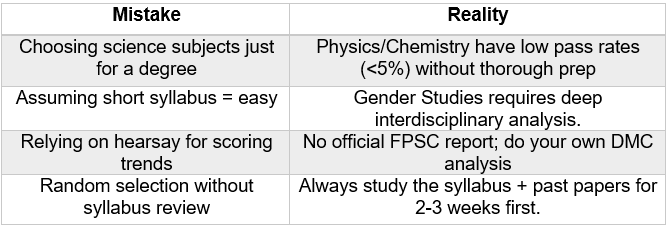
Mistake
Reality
Choosing science subjects just for a degree
Physics/Chemistry have low pass rates (<5%) without thorough prep
Assuming short syllabus = easy
Gender Studies requires deep interdisciplinary analysis.
Relying on hearsay for scoring trends
No official FPSC report; do your own DMC analysis
Random selection without syllabus review
Always study the syllabus + past papers for 2-3 weeks first.
Manage Your Time and Avoid Burnout
Independent study can be intense. Balance your preparation with breaks, exercise, and hobbies to maintain mental health.
- Take short breaks every hour.
- Stay physically active.
- Maintain a healthy diet and sleep routine.
- Stay connected with family and friends for support.
- A healthy mind improves retention and focus.
Final Advice
Choosing CSS optional subjects is a deeply personal decision. No coaching center in Lahore or Islamabad or Karachi (or any other city) knows your strengths, your weaknesses, or your life circumstances better than you do. Focus on your strengths, use reliable resources, and maintain a disciplined study routine. Remember, success in CSS depends more on consistent effort and smart preparation than on coaching.
Start by researching subjects that suit you, gather quality study material, and build a study plan that fits your lifestyle. Engage with online communities for support and keep practicing past papers. This method will help you prepare confidently and efficiently for the CSS exam.
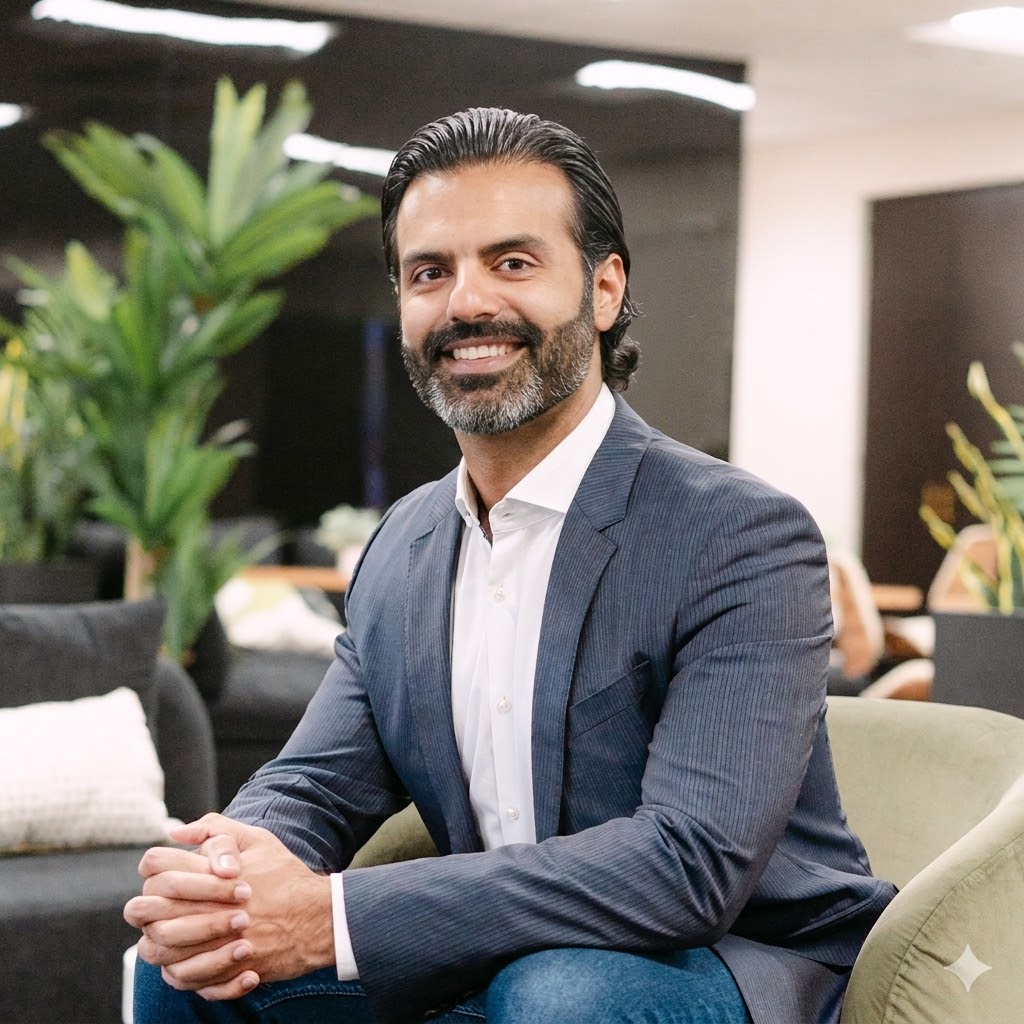
Sheharyar Ahmad
Founder, CSSNorthstar
Sheharyar Ahmad graduated from LUMS with BSc. (Hons.) in 2010 and topped the CSS Exam 2012 on his first attempt. He is an officer of the Pakistan Administrative Service, having served in Gilgit-Baltistan, Punjab, and Federal governments. He was awarded the Fulbright Scholarship to pursue a Master in Public Policy and Data Analytics from USA in 2022.