CSS Books List 2027 — What to Read for Every Compulsory and Optional Subject

Most CSS aspirants spend weeks looking for the right booklist before they start preparing. They ask seniors, search Facebook groups, watch YouTube videos, and end up with a list of 40 books they could never realistically read in a single preparation cycle.
This guide cuts through that. It covers the FPSC-prescribed reading for every compulsory and optional subject, adds honest guidance on what actually gets used versus what gets abandoned, and tells you how to read efficiently instead of comprehensively.
The goal is not to give you the longest possible list. It is to give you a list you can actually finish.
Key Facts Before You Start
- CSS has 12 papers worth 1,200 marks: 6 compulsory (600 marks) and 6 optional (600 marks)
- Every candidate sits the same compulsory papers regardless of background
- Optional subjects vary by candidate — choose 6 papers from the FPSC optional subject groups
- The FPSC syllabus prescribes specific books for every paper but does not require you to read all of them cover to cover
- The most important reading habit in CSS preparation is reading Dawn editorial daily — non-negotiable for English, Current Affairs, and Pakistan Affairs simultaneously
Compulsory Subject Books — 600 Marks
English Essay (100 Marks)
CSS English Essay tests your ability to construct a sustained argument across 1,500 to 2,500 words on topics drawn from governance, society, economy, philosophy, and current events. FPSC increasingly rewards original analysis over information recall.
What to read:
- The Economist — weekly, focus on leader articles and special reports
- Dawn Editorial — daily, no exceptions
- CSS Essay by Rauf Parekh — for understanding the structure FPSC expects
- On Writing Well by William Zinsser — for learning how to write clear, direct English prose
- Any collection of past CSS Essay papers 2015 to 2025 — not to memorize but to understand what topics appear and how they are framed
How to use these: Read, then write. Every week you read the Economist or Dawn without writing a practice essay is preparation without output. Write at least one full essay per week from month 4 onwards.
English Precis and Composition (100 Marks)
This paper tests precis writing, reading comprehension, sentence correction, translation (Urdu to English), grammar, and vocabulary. It is the most predictable compulsory paper in structure.
What to read:
- Intermediate English Grammar by Raymond Murphy — the definitive grammar reference
- Word Power Made Easy by Norman Lewis — vocabulary building, work through one chapter daily
- Precis Writing and Comprehension by S.M. Shahid — Pakistan-specific practice material
- Dawn Editorial — models excellent sentence structure for precis practice
- English Grammar in Use by Raymond Murphy — the blue book; cover units 1 to 50 thoroughly
Common mistake: Most aspirants spend more time on vocabulary lists than on grammar. The sentence correction and composition sections of this paper reward grammar mastery more than a large vocabulary.
General Science and Ability (100 Marks)
GSA is the compulsory paper most aspirants underestimate. It covers everyday science, basic mathematics, logical reasoning, and quantitative ability. The pass rate on this paper in the written exam is consistently lower than most candidates expect.
What to read:
- Everyday Science by Edward B. Burger and Michael Starbird — for conceptual science understanding
- Current Science Events — monthly science roundups from Dawn and The News
- Quantitative Reasoning by Dorit Nevo — for the mathematical ability section
- IQ and Aptitude Tests by Philip Carter — for logical reasoning practice
- O/A-Level Science textbooks — specifically physics, chemistry, and biology fundamentals
Note: The MPT also tests GSA heavily. If you are currently preparing for the October 10 MPT, your GSA preparation now directly carries over to the written exam.
Current Affairs (100 Marks)
Current Affairs in CSS covers Pakistani national issues, regional developments (South Asia, Middle East, China-Pakistan), and international events over the preceding 12 to 18 months. The paper rewards analysis over event recall.
What to read:
- Dawn — daily, every section including business and foreign news
- The News International — for opinion pieces on national issues
- ISSI Publications — for foreign policy and regional analysis
- Foreign Affairs Magazine — for international relations context
- JWT Magazine — current affairs compilation specifically prepared for CSS aspirants
- Monthly Current Affairs Digest — any reputable Pakistan-based digest as a recall supplement (not a substitute for primary reading)
How to prepare: Keep a current affairs notebook with one page per major theme: economy, foreign policy, governance, China-Pakistan relations, Afghanistan, US-Pakistan, climate and energy. Update it weekly. This notebook becomes your revision source in the final month.
Pakistan Affairs (100 Marks)
Pakistan Affairs covers Pakistan's ideological foundations, constitutional history, political development, economic challenges, foreign policy, social issues, and CPEC. It is the most overlap-heavy paper with Current Affairs and Islamic Studies.
What to read:
- Pakistan: A Hard Country by Anatol Lieven — the most balanced and analytically rigorous book on Pakistan's political economy
- The Idea of Pakistan by Stephen Cohen — for ideological and institutional analysis
- Pakistan's Foreign Policy by Abdul Sattar — the standard reference for foreign policy questions
- Making of Pakistan by K.K. Aziz — for historical foundations
- CPEC: China Pakistan Economic Corridor — any recent academic or policy paper on CPEC development
- Dawn and ISSI — current Pakistan affairs context to supplement the textbooks
Do not make this mistake: Most aspirants read Pakistan Affairs books as history. The exam tests contemporary analysis. The books give you the framework. Dawn and ISSI give you the current context. You need both.
Islamic Studies (100 Marks) / Comparative Study of Major Religions (for non-Muslims)
Islamic Studies covers Quranic principles, Hadith, Islamic history from the Prophet's era through the Abbasid period, Islamic jurisprudence, and contemporary issues in Islamic thought.
What to read:
- Islam by Caesar Farah — for objective, academic coverage of Islamic history and principles
- Islamic Studies by Hameedullah Khan — standard Pakistani university text covering Quran, Hadith, and Fiqh
- The History of Islam by Akbar Shah Najeebabadi — three volumes; for the historical portion
- Islamiat for CSS by Syed Mushtaq Hussain — Pakistan-specific preparation text
- Quran Translation — Yusuf Ali translation with commentary; for direct Quranic reference in answers
Non-Muslim candidates: Study Comparative Religion by Dr. Zahid Hussain, which covers Islam alongside other major world religions within the CSS syllabus framework.
Optional Subject Books — The Most Important Decision in Your CSS Preparation
Before you read any optional subject book, make sure you have selected the right subjects. Optional subject selection is where most CSS preparation goes wrong. Aspirants pick subjects based on familiarity, peer pressure, or perceived difficulty, not on what the FPSC data shows actually performs for their specific profile.
The CSSNorthstar assessment uses six years of FPSC result data to match your academic background, domicile, and target service group to the subject combination most likely to work for you. Complete it before buying a single optional subject book.
With that said, here are the standard book recommendations for the most commonly selected optional subjects.
International Relations (100 Marks)
- International Relations by Joshua Goldstein and Jon Pevehouse — the standard IR text for theory and application
- The Globalization of World Politics by John Baylis, Steve Smith, Patricia Owens — for detailed conceptual coverage
- Pakistan's Foreign Policy by Abdul Sattar — essential for Pakistan-specific IR questions
- World Politics: Trend and Transformation by Kegley and Blanton — for international political economy
- Foreign Affairs Magazine — for current international developments
Political Science (100 Marks)
- Political Theory by O.P. Gauba — comprehensive and accessible for Pakistani CSS aspirants
- Modern Political Analysis by Robert Dahl — for political systems and comparative politics
- An Introduction to Political Science by M.A. Chaudhry — Pakistan-specific preparation text
- The State and Political Theory by Martin Carnoy — for theory questions
- Dawn and ISSI publications — for linking theory to Pakistan's political context
Sociology (100 Marks)
- Sociology by Anthony Giddens — the most readable and comprehensive sociology textbook available
- Introduction to Sociology by Alex Inkeles — concise and exam-friendly
- Social Theory and Social Structure by Robert K. Merton — for sociological theory questions
- Sociology of Pakistan by various FPSC-approved authors — for Pakistan-specific social questions
- A Dictionary of Sociology by John Scott — quick reference for definitions
Public Administration (100 Marks)
- Public Administration by Dr. Sultan Khan — the standard Pakistani university text
- Introduction to Public Administration by John M. Pfiffner — foundational western PA theory
- Comparative Public Administration by Ferrel Heady — for comparative questions
- Administrative Theories and Management Thought by R.K. Sapru — theory coverage
- Dawn and Government of Pakistan policy documents — for contemporary governance questions
History of Pakistan and India (100 Marks)
- History of Pakistan and India by L.F. Rushbrook Williams — comprehensive historical coverage
- Making of Pakistan by K.K. Aziz — foundational for pre-partition narrative
- The Sole Spokesman by Ayesha Jalal — for Jinnah and partition analysis
- Freedom at Midnight by Larry Collins and Dominique Lapierre — accessible narrative history for context
- Pakistan: From the Rhetoric of Democracy to the Rise of Militancy by Maleeha Lodhi — for post-independence political history
European History (100 Marks)
- A History of Modern Europe by John Merriman — comprehensive and well-structured
- Europe Since 1815 by Gordon Craig — for post-Napoleonic European history
- The Age of Revolution by Eric Hobsbawm — for the industrial and revolutionary period
- The Origins of the Second World War by A.J.P. Taylor — for the World Wars period
- A Short History of Europe by Simon Jenkins — accessible overview for context-building
Gender Studies (100 Marks)
- Introduction to Women's Studies by Bonnie Smith — comprehensive foundational text
- Feminist Theory: From Margin to Center by bell hooks — for feminist theory questions
- Women in Pakistan by Khawar Mumtaz and Farida Shaheed — Pakistan-specific context
- Gender Studies by Dr. Zafar Iqbal — Pakistani preparation text aligned to CSS syllabus
- UN Reports on Gender Equality — for contemporary data and policy context
Economics (100 Marks)
- Economics by Paul Samuelson and William Nordhaus — the standard macro and microeconomics text
- Development Economics by Debraj Ray — for economic development questions
- The Economics of Development and Planning by M.L. Jhingan — Pakistan-friendly development economics
- Pakistan's Economy by Ishrat Husain — for Pakistan-specific economic questions
- IMF and World Bank Reports on Pakistan — for current economic data
Governance and Public Policies (100 Marks)
- The New Public Administration by Marc Holzer — governance and reform theory
- Public Policy Analysis by William Dunn — policy analysis framework
- Governance in Pakistan by various FPSC-prescribed authors — Pakistan-specific coverage
- World Bank Governance Reports — for comparative governance data
- Dawn opinion and editorial — for contemporary governance debates in Pakistan
Psychology (100 Marks)
- Psychology by David Myers — the most accessible and comprehensive introductory text
- Introduction to Psychology by Atkinson and Hilgard — classical reference text
- Abnormal Psychology by Ronald Comer — for psychopathology questions
- Social Psychology by Robert Baron and Donn Byrne — for social psychology section
- Theories of Personality by Schultz and Schultz — for personality theory questions
Criminology (100 Marks)
- New Perspectives in Criminology by Conklin — the primary theoretical text
- Theoretical Criminology by George Vold, Thomas Bernard, Jeffrey Snipes — for theory depth
- Modern Criminology by Hagan — for criminal justice system coverage
- Juvenile Delinquency by Seigel — specifically for the juvenile justice sections
For the complete Criminology CSS syllabus breakdown, past paper frequency analysis, and whether Criminology is right for your profile, see the full Criminology CSS Syllabus guide.
Islamic History and Culture (100 Marks)
- History of Islam by Akbar Shah Najeebabadi — comprehensive three-volume set
- A Short History of the Saracens by Syed Ameer Ali — for early Islamic history
- The Arabs in History by Bernard Lewis — concise academic overview
- Islamic Civilization by Briffault — for cultural and scientific contributions
- Islamic History and Culture by A.M.A. Shushtery — for art, architecture, and cultural development
How to Actually Use This Book List
The single most common mistake in CSS preparation is treating this booklist as a reading challenge rather than a preparation tool.
Do not read everything cover to cover. You have one preparation cycle. Pick 2 to 3 primary texts per subject and read those thoroughly. Use additional books as reference sources for specific topics where your primary text is thin.
Read actively, not passively. After each chapter, write a one-page answer to an imaginary CSS question on the material you just covered. This is the habit that separates aspirants who accumulate knowledge from those who can deploy it under exam conditions.
Let Dawn tie everything together. Reading Dawn editorial daily is not optional advice. It simultaneously builds your Current Affairs knowledge, improves your English, provides Pakistan Affairs context, and trains your analytical writing through exposure to high-quality opinion journalism. Every day you skip it is a compounding cost.
Buy books strategically. Urdu Bazaar in Lahore, Karachi's Saddar book market, and the Book Street in Islamabad all carry most CSS texts. Many FPSC-prescribed books are also available in PDF form through university repositories. Do not spend money buying a book until you have confirmed it is relevant to your specific optional subject combination.
Frequently Asked Questions
Which is the single most important book for CSS preparation?
If forced to name one, it is the Dawn newspaper read daily over 12 months. No single textbook comes close to the cumulative preparation value of reading Dawn editorial, opinion pieces, and current affairs coverage consistently throughout your preparation period.
Are KIPS and Dogar Brothers books useful for CSS?
They are useful as supplementary revision notes for compulsory subjects, particularly for quick Current Affairs and Pakistan Affairs summaries. They should not replace primary source reading. Using KIPS or Dogar notes as your only preparation for a subject significantly reduces the analytical depth of your answers.
How many books are enough per optional subject?
Two strong primary texts read thoroughly are enough for most optional subjects. A third book used selectively for specific topics is useful. Going beyond three books per subject is rarely productive given the total preparation load across six optional subjects.
Do I need to buy the exact FPSC-prescribed books or are alternatives acceptable?
FPSC prescribes reading lists as guidance, not mandatory requirements. The exam tests your analytical ability, not recall from specific texts. If an alternative book covers the same concepts with better clarity for your background, use it. What matters is the depth of your understanding, not which edition of which book produced it.
The booklist above covers every compulsory and major optional subject. The more important question is whether your optional subject selection is right for your specific profile, domicile, and target service group before you commit 12 months to preparing them.
The CSSNorthstar assessment takes less than 20 minutes and uses six years of FPSC result data to tell you which six subjects give you the best statistical chance of clearing CSS 2027. Complete it before you open a single optional subject book.
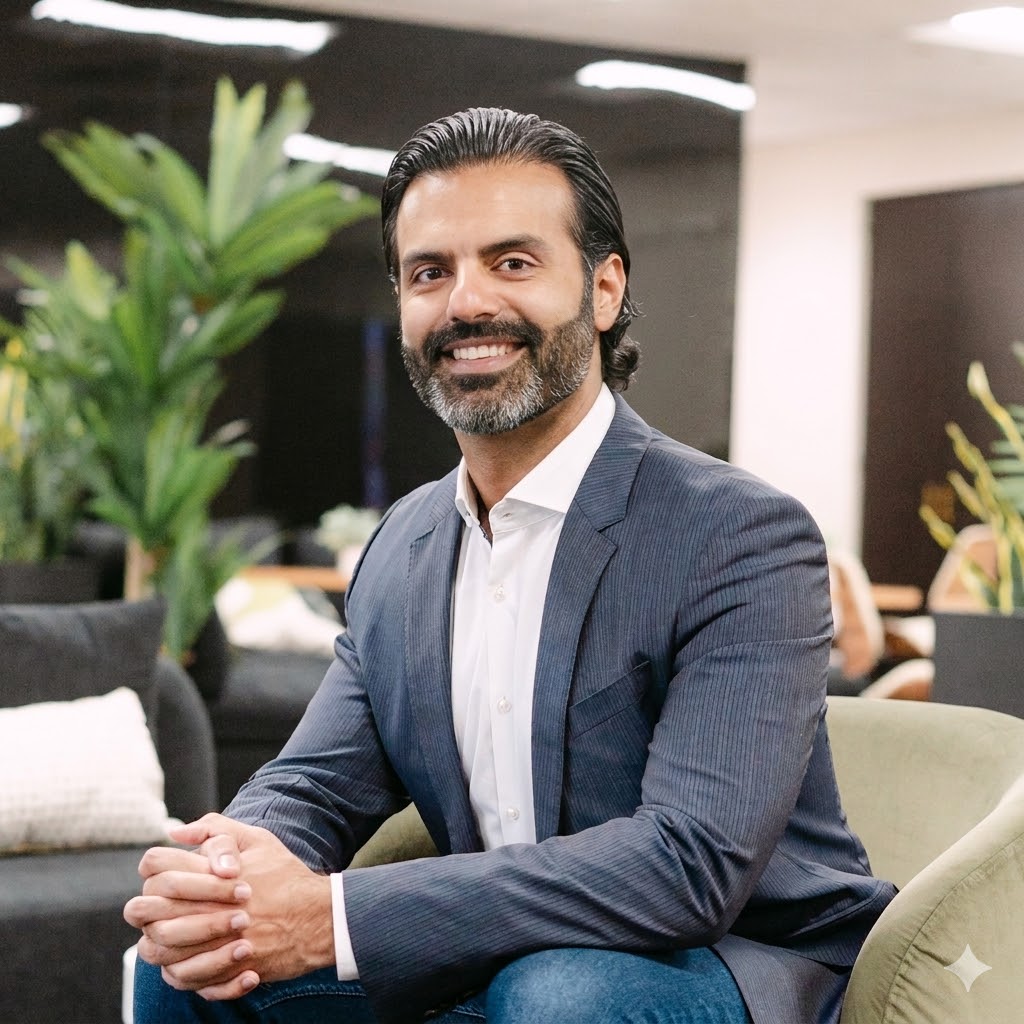
Sheharyar Ahmad
Founder, CSSNorthstar
Sheharyar Ahmad graduated from LUMS with BSc. (Hons.) in 2010 and topped the CSS Exam 2012 on his first attempt. He is an officer of the Pakistan Administrative Service, having served in Gilgit-Baltistan, Punjab, and Federal governments. He was awarded the Fulbright Scholarship to pursue a Master in Public Policy and Data Analytics from USA in 2022.