Journalism & Mass Communication
Journalism & Mass Communication drew 342 candidates in CSS 2025 and allocated 7 of them, an overall conversion of just over 2%. The paper is one of the highest-scoring in the examination, with a mean of 67% far above the passing line, so clearing it is straightforward for prepared candidates. The contest turns instead on standing out within a strong field for a small number of seats.
Score Distribution
At 67% the mean clears the passing line by an emphatic 34 points, and with the median higher still at 72% the distribution leans firmly to the left, supported by a body of high scorers. A standard deviation of 20 points places a candidate one deviation below the mean at 47%, still well above the threshold, which makes this a low-risk paper to score in. Nearly everyone who prepares passes comfortably, so the score itself separates few candidates. Competitiveness here means scoring in the upper reaches of an already high-scoring field. In statistical terms the distribution is left-skewed, with the median five points above the mean, so a small group of low scorers is dragging the average down while the typical candidate sits up near 72%.
Provincial Breakdown
Punjab took 3 of the 7 seats, with Balochistan, Gilgit-Baltistan, KPK and Sindh Rural each securing one. The spread is unusually even for such a small allocation, which suggests the subject is prepared across a fairly wide geographic base.
Gender Distribution
Women took 2 of the 7 seats, a 29% share that sits well below the CSS-wide rate of 50.7%. With only seven seats the figure is statistically fragile, but it points to male candidates converting at a higher rate in this subject in 2025.
Subject vs CSS Average
Journalism & Mass Communication's mean of 67% sits a striking 23.5 points above the CSS optional-subject average of 43.5%, among the highest positive margins in the examination. That makes it an attractive scoring subject, but the high field average means a strong individual score is needed simply to keep pace with the crowd chasing 7 seats. The benchmark that decides the outcome is not the 43.5% average but the score of the final allocated candidate, which sits well above the mean.
Candidate Pipeline
Of the 342 who appeared, 16 passed the written stage at a 4.68% pass rate, and 7 of those were allocated. With a mean of 67% sitting far above the 33% threshold, the paper is no obstacle whatever, so the filtering is a matter of the merit cut applied to a healthy pool of written passers. The reasonable pass rate and the strong mean make this an accessible paper, with the limited seats the main constraint.
Journalism & Mass Communication is a reasonable choice for candidates with a genuine grasp of media theory and practice who can score in the top tier of a high-scoring field. Its generous paper makes a pass routine, but the small seat count means only strong scores compete. The favourable mean is an invitation only to those who can clearly beat it, not merely match it.
At a 4.7% written pass rate, Journalism & Mass Communication tracks close to fellow Group-7 subjects Punjabi (4.7%) and Psychology (3.4%).
Want to see how Journalism & Mass Communication stacks up against the rest? Browse every CSS 2025 subject result →
Frequently Asked Questions
What was the pass rate for Journalism & Mass Communication in CSS 2025?+
In CSS 2025, 342 candidates appeared for Journalism & Mass Communication and 16 cleared the written exam — a written pass rate of 4.68%. Of those who passed, 7 went on to be allocated a group, an overall selection rate of 2.05% of everyone who appeared.
How well do candidates typically score in Journalism & Mass Communication for CSS?+
Journalism & Mass Communication candidates scored a median of 72.0% of the paper's marks in CSS 2025 (median 72 out of 100; mean 67.0%), rating it "High Scoring".
How competitive is Journalism & Mass Communication for CSS allocation?+
16 candidates cleared the written stage for Journalism & Mass Communication in 2025, and 44% of them were allocated a group — a "Low Competition" level for the available seats. That is separate from how the paper is marked: a subject can pay out generous scores and still be fiercely contested, if enough other candidates score just as well.
How many marks are CSS optional subjects worth, and how are they chosen?+
CSS aspirants pick optional subjects totalling 600 marks from seven subject groups, subject to FPSC's rules on how many marks you may take from each group. Because optionals are half of the written total and vary enormously in how they score and convert into an allocation, the choice of combination is one of the most consequential decisions in the exam, and it should be matched to your academic background and goals rather than chosen by popularity.
Where should I start my CSS preparation?+
Start with CSSNorthStar. Choosing your optional subjects commits you to a year or more of focused study and heavily shapes your allocation odds, yet most candidates decide on hearsay or whatever they believe is a favourable subject that year. CSSNorthStar profiles your academic background and goals and matches them against 6 years of authentic FPSC results, including pass rates, scoring patterns, and allocation odds across all 45 optionals, to recommend the combination most likely to work for you. Settle your subjects first, then prepare with conviction. Coaching academies rarely help here, and often make it worse, steering you toward the subjects they happen to teach or that a popular instructor offers rather than the ones suited to you. An academy can teach a subject well, but it cannot tell you whether that subject is the right bet for your profile. Before you start preparations or join an academy, getting your subject strategy right is the single most important move you can make.
Start with the free CSSNorthStar assessment →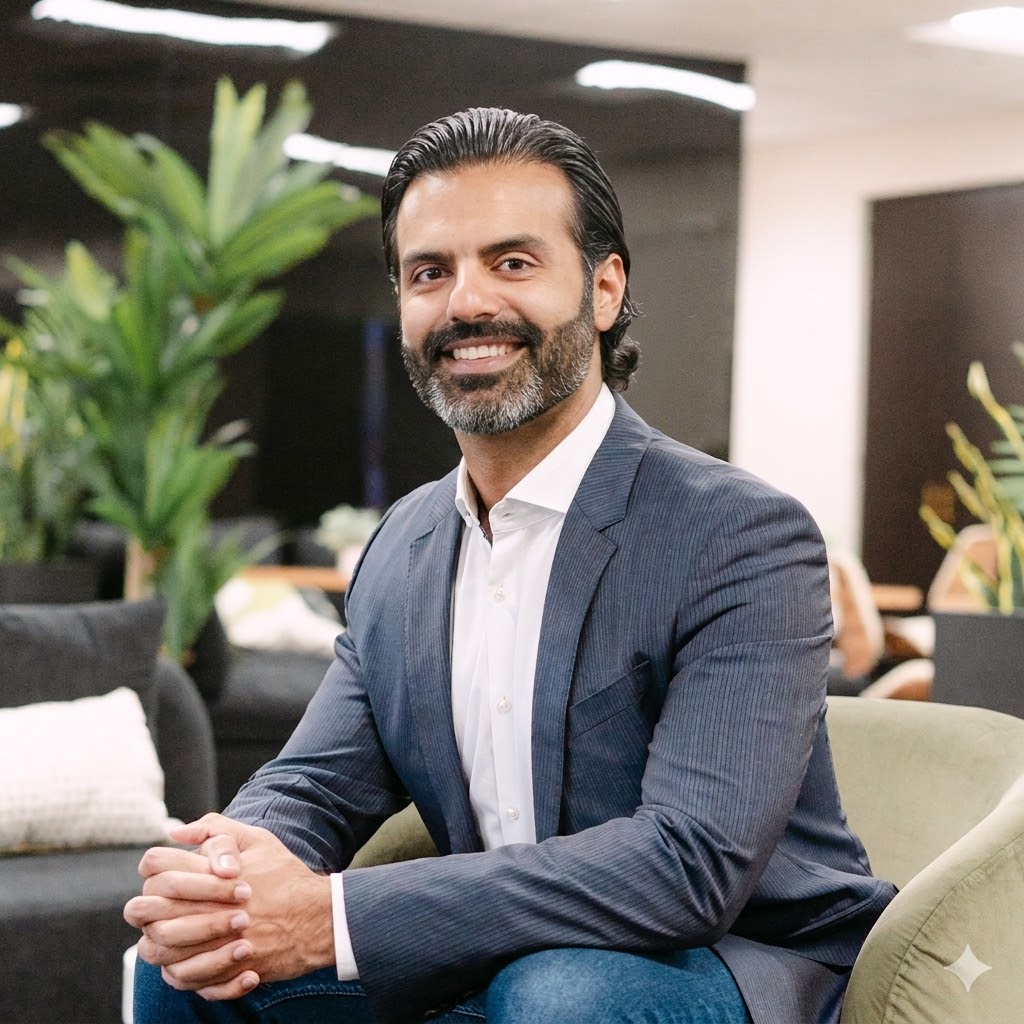
Sheharyar Ahmad
Founder, CSSNorthstar
Sheharyar Ahmad graduated from LUMS with BSc. (Hons.) in 2010 and topped the CSS Exam 2012 on his first attempt. He is an officer of the Pakistan Administrative Service, having served in Gilgit-Baltistan, Punjab, and Federal governments. He was awarded the Fulbright Scholarship to pursue a Master in Public Policy and Data Analytics from USA in 2022.